Réhabilitation Dock des Alcools, Porte de la Chapelle
Description
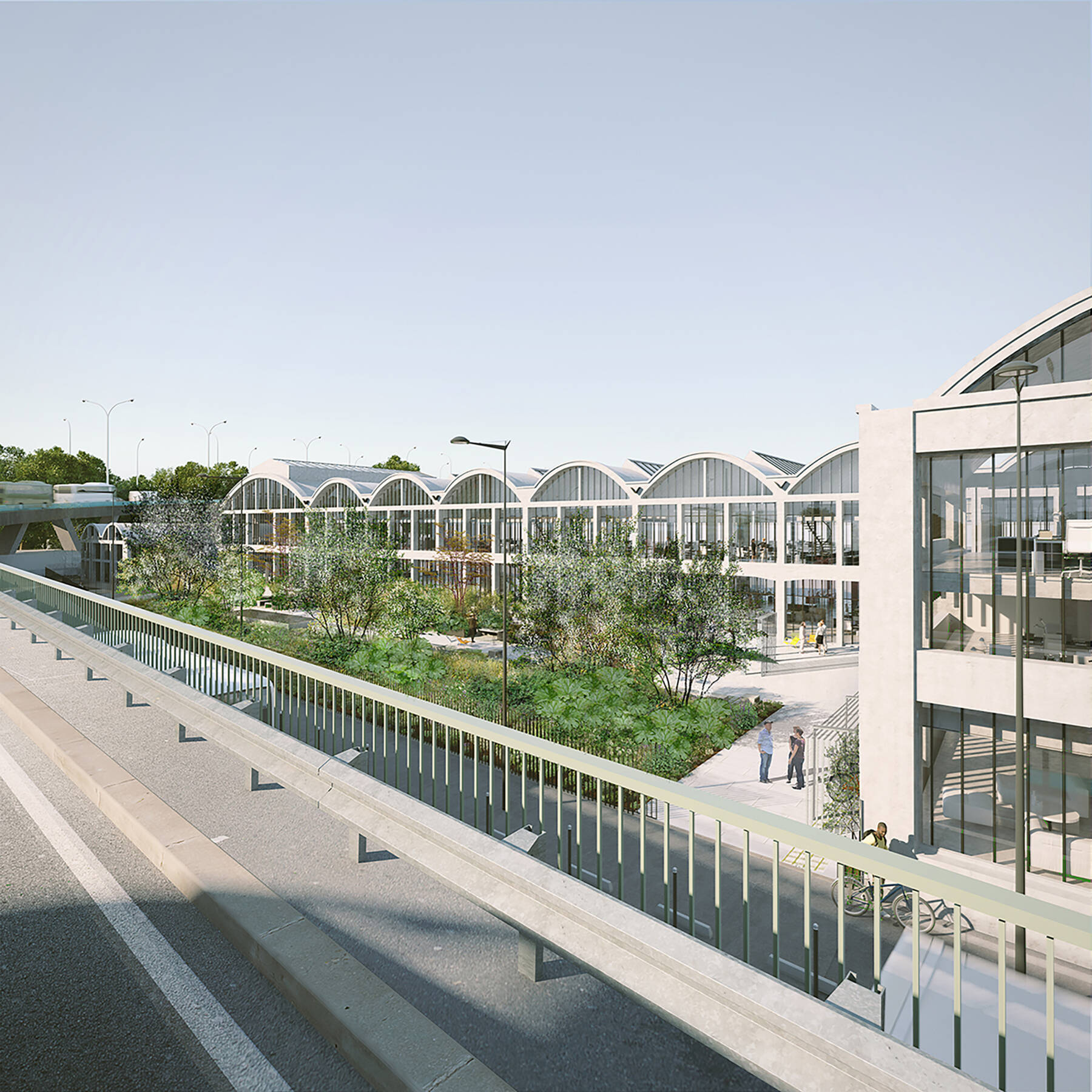
In the rapidly transforming district of Porte de la Chapelle in Paris, the industrial building conversion of the Docks des Alcools gives new life to an early‑1920s industrial landmark. The building rehabilitation integrates a contemporary façade that accentuates the building’s historic profile, reinterpreting it as a modern landmark and visual threshold at one of Paris’s principal entry points. Avec un programme tertiaire encore ouvert, l’attention est portée sur la qualité et la flexibilité des environnements de travail, dans un cadre paysagé.
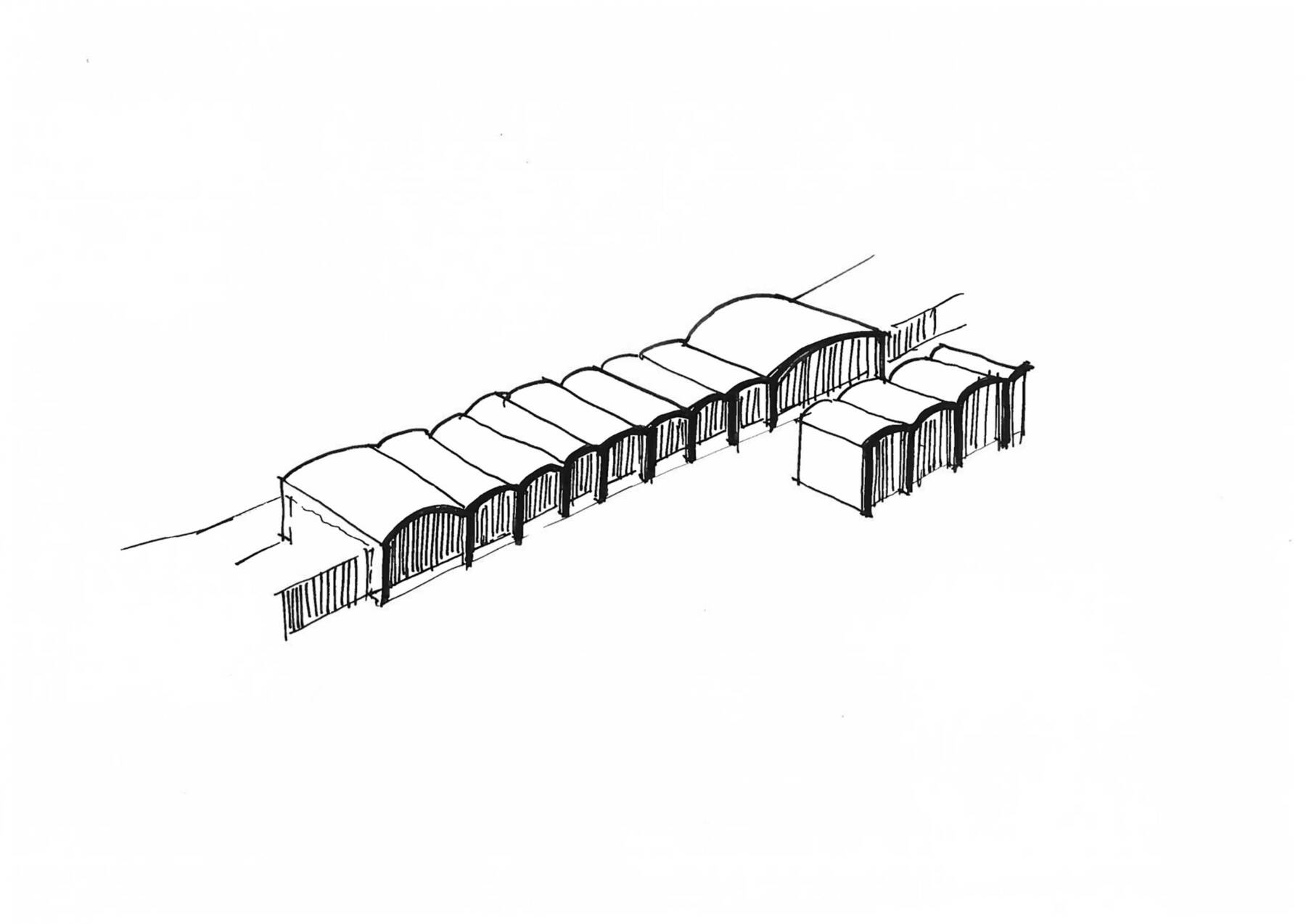
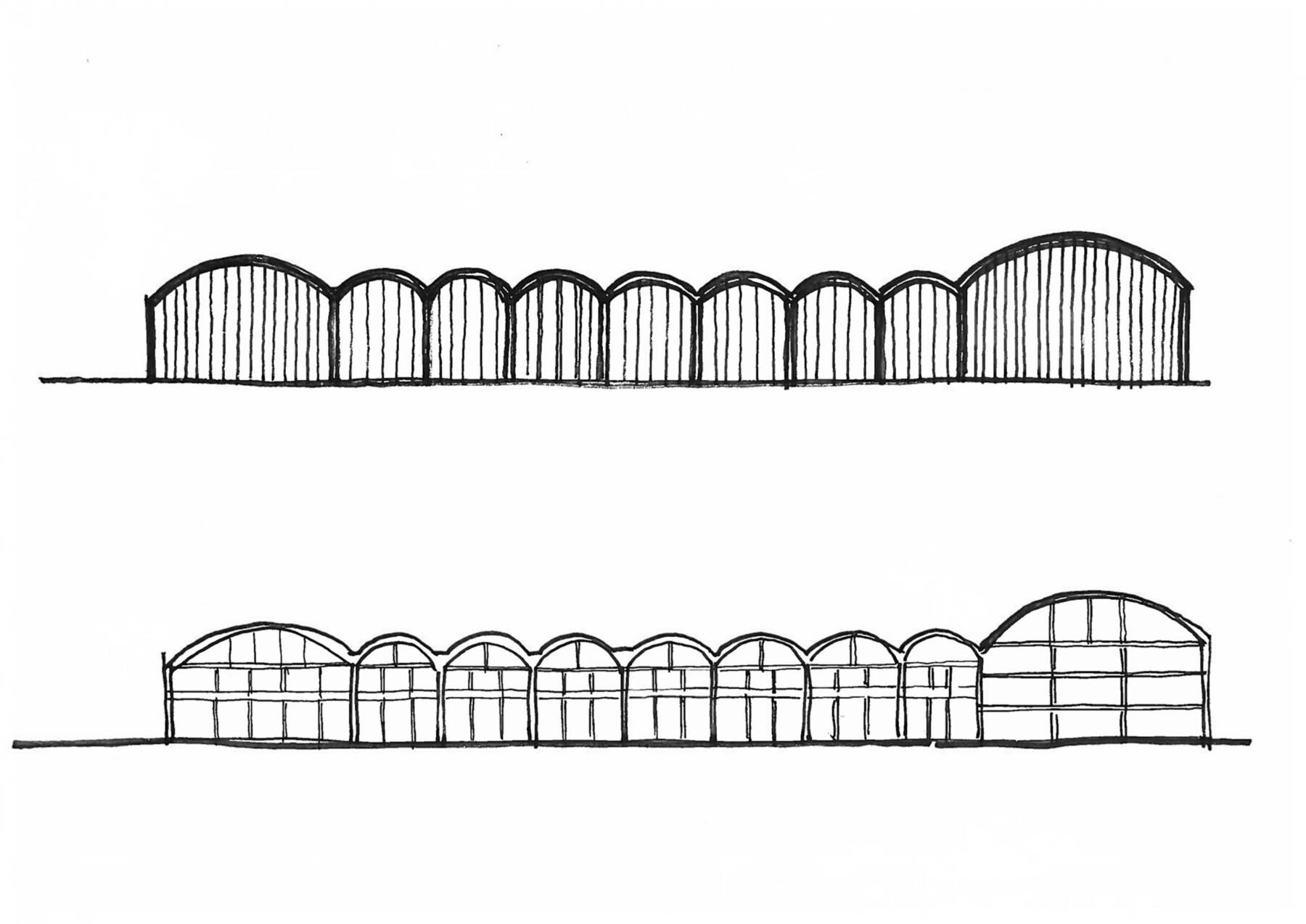
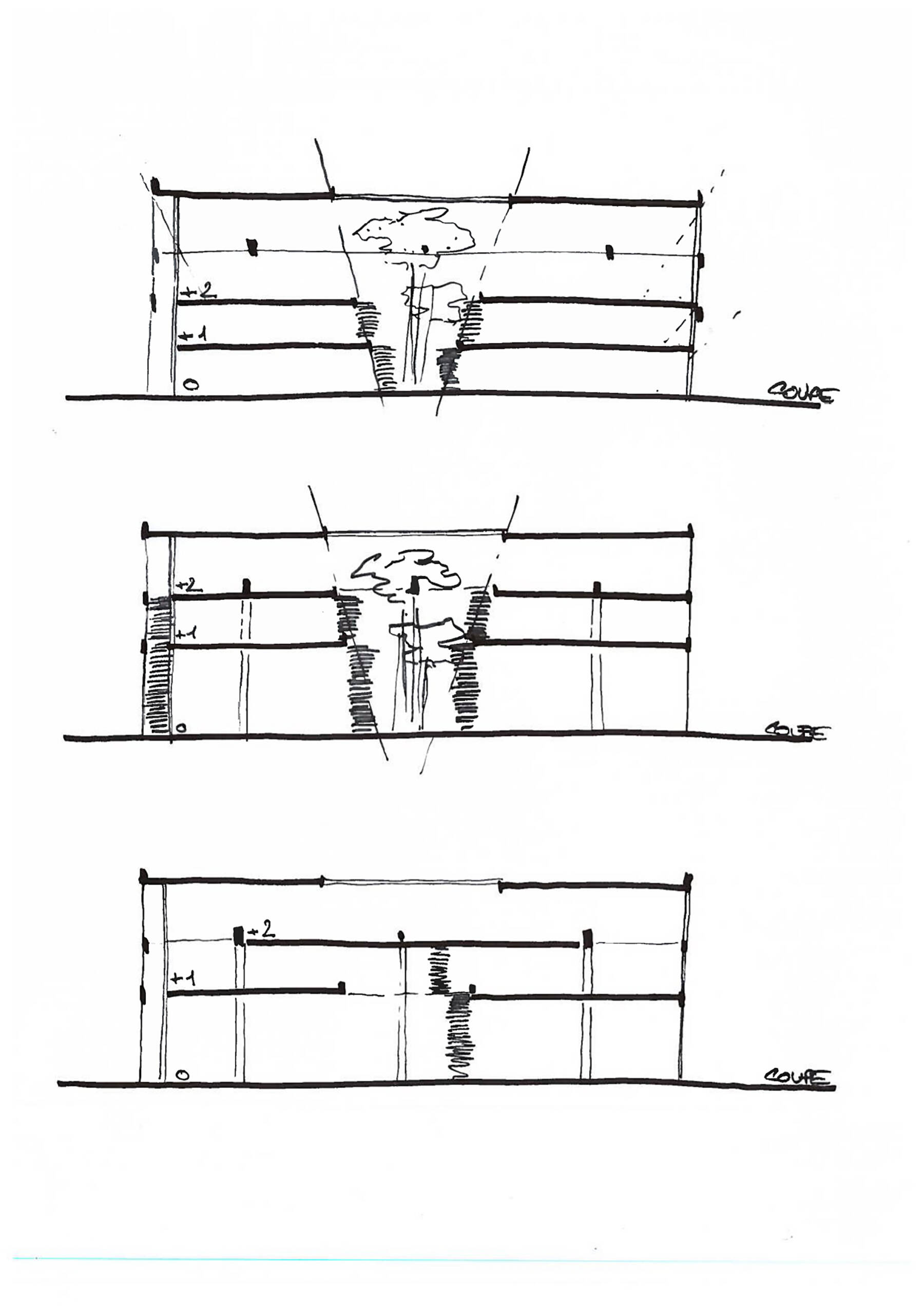
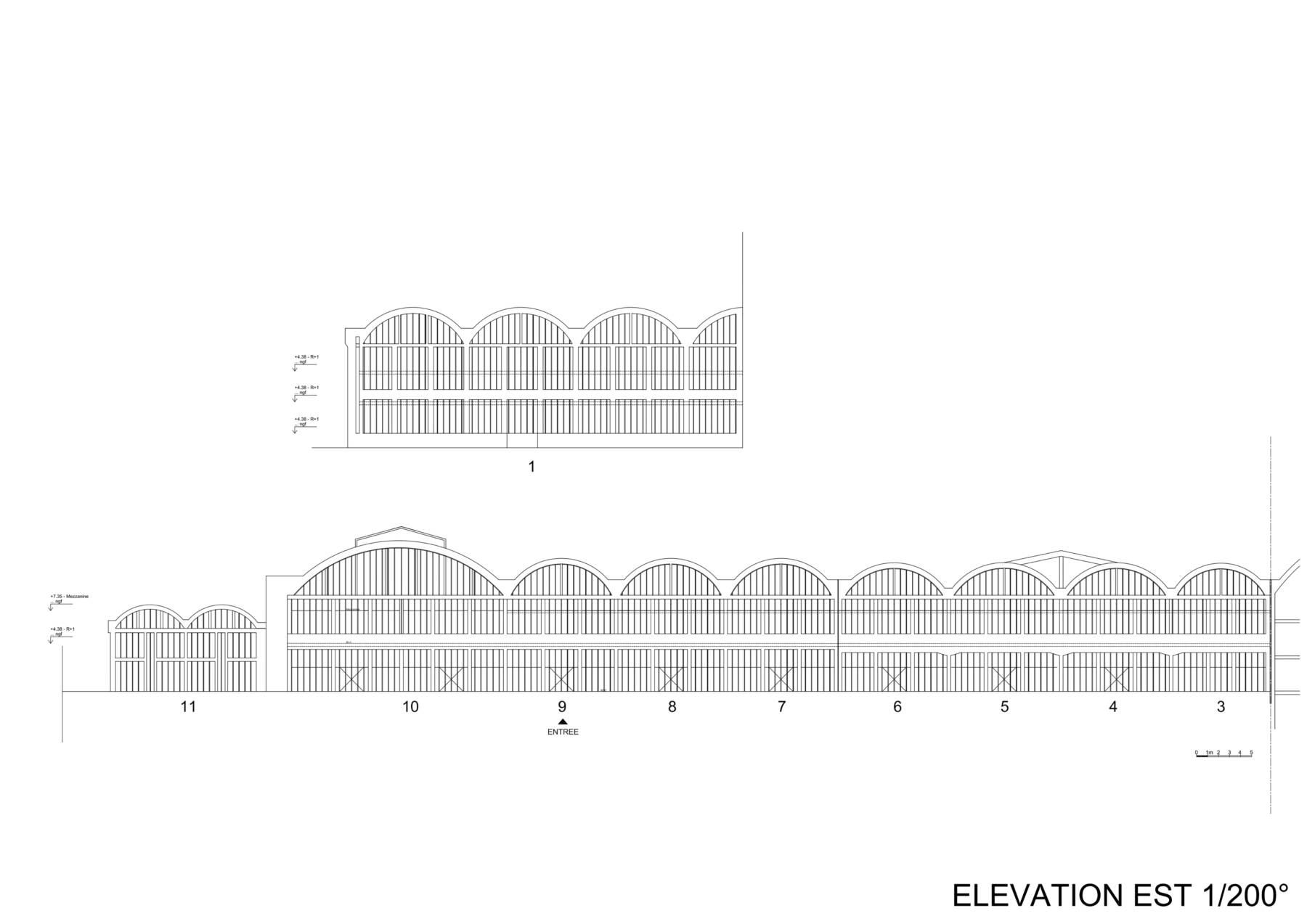
Anticipating an undefined future tertiary program, the adaptive reuse architect prioritizes flexibility, efficient spatial organization, and high-quality work environments within a structured landscape context. At the threshold of the capital, the building engages in dialogue with the recent architectural ensembles that currently define the Porte de la Chapelle area. The heritage building renovation restores and enhances this distinctive piece of industrial heritage, reversing decades of alterations and extensions that had diluted its original form. By restoring and revealing the slender concrete vaults — their elliptical, shell‑like geometry characteristic of early modern engineering — the design of the industrial building conversion preserves the site’s architectural integrity, reinstating its industrial character while incorporating contemporary environmental performance and occupant comfort standards. En magnifiant les voûtes minces et ovoïdes en béton et en supprimant les adjonctions des années 1980, l’agence redonne à l’architecture son caractère industrielle tout en apportant les qualités et conforts contemporains. The façade redesign of this heritage building renovation enhances daylight access and regulates solar gain, combining efficiency with expressive restraint. Simplicity and material honesty define the design, emphasizing the clarity and strength of the exposed concrete structure. At ground level, the restored vaulted sequence is revealed, re-establishing a spatial rhythm, with independent mezzanines structuring the open-plan workspaces. Circulation in this industrial building conversion is organized around a central stair core and two peripheral stairwells, enabling efficient movement and adaptable layouts suitable for future office or campus configurations.
Within this dense urban context, the landscape design of this industrial building conversion establishes a publicly accessible garden that engages both building occupants and the wider urban frontage along the A1 motorway and Avenue du Président Wilson. A planted forecourt mitigates urban heat island effects and creates a spatial clearing, introducing openness within the dense fabric of Porte de la Chapelle, and recasting the former industrial structure as a luminous, resilient landmark at the city’s northern threshold.
Informations
client
Compagnie de Phalsbourg
program
Restructuring of a building typical of 1920s industrial architecture in reinforced concrete.
localisation
21-25, 3 avenue du Président Wilson, 93210 Saint-Denis
équipe
Architecture Patrick Mauger, architecte mandataire
Oteis, TCE
Qualiconsult, bureau de contrôle
companies
Separate trades
surface
10 100 m²
cost
11,2 M€
avancement
completed
delivery
2024
Image
ArtefactoryLab